top of page

Macular Pucker or Epiretinal Membrane (ERM)

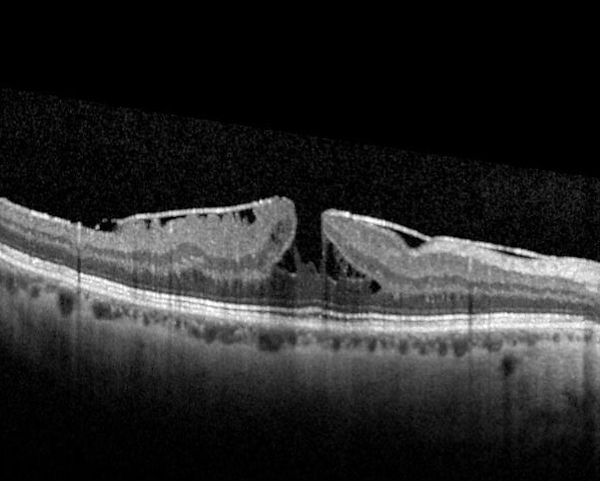
optical coherence tomography image of epiretinal membrane or macular pucker

​

  • What it is: A thin layer of tissue that grows over the macula, causing it to wrinkle or distort.​

​

  • Who it affects: Most common in adults over age 50; risk increases with age, prior retinal tears or detachment, or eye surgery.
​

  • Symptoms:

    • Blurred or distorted central vision

    • Straight lines appearing wavy

    • Difficulty with reading or detailed work

​

  • Treatments:

    • Observation: For mild macular puckers not significantly affecting vision

    • Vitrectomy surgery: Can remove the tissue growth (for macular pucker), often improving or stabilizing vision

​

  • Warning signs: If you notice new distortion or blurred central vision, come see us for an evaluation.


Early diagnosis and treatment offer the best visual outcome. Contact us today for a consultation.

Frequently Asked Questions

Q: How is an epiretinal membrane diagnosed?

​

An epiretinal membrane is diagnosed through a comprehensive dilated eye exam and confirmed with optical coherence tomography (OCT). OCT provides high-resolution cross-sectional images of the macula, allowing the retina specialist to see the membrane and assess its effect on retinal structure.

​

Q: Can an epiretinal membrane be missed on a routine eye exam?

​

Mild epiretinal membranes may be subtle and can be difficult to detect without dilation or OCT imaging. Advanced retinal imaging is essential when patients report distortion or unexplained central vision changes.

​

Q: Is epiretinal membrane an emergency?

​

Epiretinal membrane is not an emergency. It typically progresses slowly. However, evaluation by a retina specialist is important to determine severity, establish a baseline, and monitor for changes over time.

​

Q: Does an epiretinal membrane always require surgery?

​

No. Many epiretinal membranes are mild and do not require surgery. Surgical treatment is considered when visual symptoms interfere with daily activities or when distortion becomes bothersome. The decision is based on symptoms, OCT findings, and patient goals.

​

Q: How quickly should I see a retina specialist if epiretinal membrane is suspected?

​

If you notice persistent distortion or blurred central vision, you should schedule an evaluation with a retina specialist. Early diagnosis allows for proper monitoring and informed discussion about treatment options.

Plant Shadow

Sina Molavi

2025-12-04

Very professional and efficient

Andrew

2025-10-13

Very nice doctor and reception

Russell Moore

2025-10-03

Dr. Wong repaired a very large bobble on my retina and my eye sight has improved drastically

Nancy Robertson

2025-10-01

I was referred to Dr Wong and found her knowledgeable and explained my condition and course of treatment very thoroughly. Would highly recommend her to anyone with retina concerns. Her staff was very kind and respectful.

Rhonda Neil

2025-09-29

Dr. Wong explained all procedures in detail. Made me very comfortable.

Browse more 5 star reviews at:  WebMD  Healthgrades  Yelp

Beacon Retina

Dr. Sophia Wong - Retina Specialist and Board-Certified Ophthalmologist serving Bethesda, Chevy Chase, Potomac, Washington, DC, and neighboring areas in Montgomery County, Arlington and Fairfax County

  • Facebook
  • Instagram
  • LinkedIn
  • YouTube

5272 River Rd

Suite 100

Bethesda, MD 20816​​​​​​​

Hours

Mon - Fri: 9:00 am - 5:00 pm

Sat/Sun: Closed

Phone: (240) 563-9900
Fax: (240) 341-0816
Email: office@beaconretina.com

© 2025 by Beacon Retina, PC. 

bottom of page