top of page

Retinal Tears and Detachment

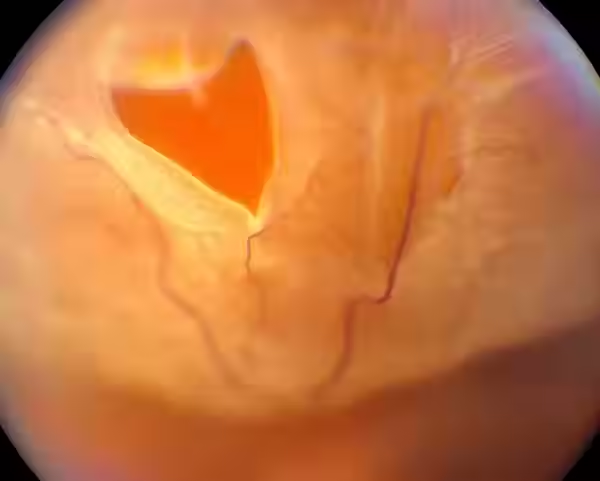
fundus photo of retinal tear with retinal detachment

​

  • What it is: A retinal tear is a small break or opening in the retina. If fluid passes through the tear, the retina can detach, leading to permanent vision loss if untreated.

​

  • Who it affects: Most often adults over age 50, especially those with high myopia (severe nearsightedness), prior eye surgery, or trauma.
​

  • Symptoms:

    • Sudden increase in floaters (small dark spots or cobwebs)

    • Flashes of light in one eye

    • A shadow or curtain over part of your vision

​

  • Treatments:

    • Laser or freezing (cryo) treatment for small tears, usually performed in the office

    • Pneumatic retinopexy, involving the placement of a gas bubble

    • Surgery (such as vitrectomy or scleral buckle) for retinal detachment

​

  • Warning signs: Any sudden new flashes, floaters, or a dark curtain in your vision is an emergency — seek care immediately.

​

For more information about flashes and floaters, read our detailed blog post here. For information on retinal detachment repair, explore these pages for vitrectomy and scleral buckle surgery.​

Frequently Asked Questions

Q: Can retinal tears or detachments occur without symptoms?

​

Yes. Some retinal tears cause few or no symptoms initially and are found during routine eye exams. Retinal detachments, however, almost always cause noticeable vision changes as they progress.

​

Q: What can cause someone to have a retinal tear or detachment?

​

Common risk factors include:

  • Posterior vitreous detachment (PVD)

  • High myopia (nearsightedness)

  • Eye trauma

  • Prior eye surgery

  • Lattice degeneration
    Understanding risk factors helps guide monitoring and prevention.

​

Q: How is a retinal tear different from a retinal detachment?

​

A retinal tear is a break or rip in the retina, but the retina overall remains attached and the field of vision remains intact.  A retinal detachment occurs when fluid passes through the tear and lifts the retina away from its underlying support tissue. The area of lifted or separated retina is called a retinal detachment. When there is a retinal detachment, the field of vision is compromised and patients may notice a dark curtain or shadow in the peripheral vision. A retinal tear, if untreated, can progress to a retinal detachment. Therefore, prompt diagnosis and treatment are crucial for protecting the vision.​

​

Q: Is retinal detachment an emergency?

​

Yes. Retinal detachment is a vision-threatening emergency. Prompt diagnosis and treatment significantly improve the chances of preserving vision.

​

Q: Does every retinal tear need treatment?

​

Not all retinal tears require immediate treatment. However, tears with high-risk features or associated symptoms are usually treated to reduce the risk of retinal detachment. Your retina specialist will recommend treatment based on the tear’s appearance and your symptoms.

​

Q: Can vision improve after retinal detachment surgery?

​

Vision often improves after successful surgery, but the degree of recovery depends on factors such as how long the retina was detached and whether the macula was involved. Early treatment generally leads to better visual outcomes.

​

Q: What is the recovery like after retinal tear or detachment treatment?

​

Recovery varies by treatment type. Laser treatment typically has minimal recovery time, while surgical repair may require activity restrictions such as avoiding air travel for a certain period of time, or positioning face-down. Your retina specialist will provide individualized guidance.

​

Q: Can retinal tears or detachment recur after treatment?

​

While treatment is highly effective, new retinal tears or recurrent detachment can occur. Regular follow-up and prompt evaluation of new symptoms are essential for long-term retinal health.

Plant Shadow

Sina Molavi

2025-12-04

Very professional and efficient

Andrew

2025-10-13

Very nice doctor and reception

Russell Moore

2025-10-03

Dr. Wong repaired a very large bobble on my retina and my eye sight has improved drastically

Nancy Robertson

2025-10-01

I was referred to Dr Wong and found her knowledgeable and explained my condition and course of treatment very thoroughly. Would highly recommend her to anyone with retina concerns. Her staff was very kind and respectful.

Rhonda Neil

2025-09-29

Dr. Wong explained all procedures in detail. Made me very comfortable.

Browse more 5 star reviews at:  WebMD  Healthgrades  Yelp

Beacon Retina

Dr. Sophia Wong - Retina Specialist and Board-Certified Ophthalmologist serving Bethesda, Chevy Chase, Potomac, Washington, DC, and neighboring areas in Montgomery County, Arlington and Fairfax County

  • Facebook
  • Instagram
  • LinkedIn
  • YouTube

5272 River Rd

Suite 100

Bethesda, MD 20816​​​​​​​

Hours

Mon - Fri: 9:00 am - 5:00 pm

Sat/Sun: Closed

Phone: (240) 563-9900
Fax: (240) 341-0816
Email: office@beaconretina.com

© 2025 by Beacon Retina, PC. 

bottom of page