

Lattice Degeneration
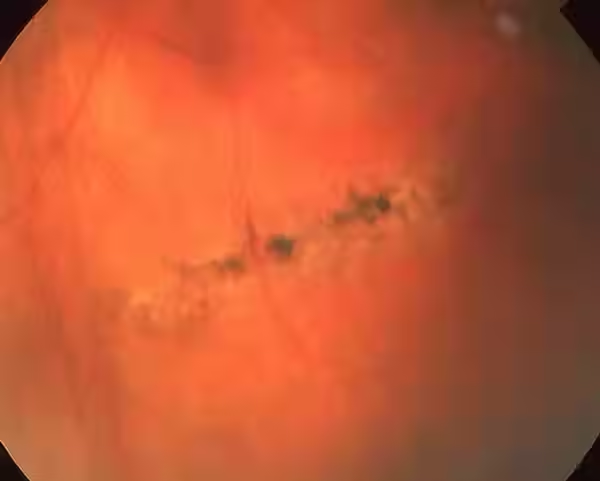
Lattice degeneration is a peripheral retinal change seen on exam in which certain areas of the retina become thin, white, and crisscrossed in a lattice-like pattern.
What Is Lattice Degeneration?

Lattice degeneration is a peripheral retinal change seen on exam in which certain areas of the retina become thin, white, and crisscrossed in a lattice-like pattern. These areas may also develop small atrophic holes. It is a common degenerative finding in the retina and is usually discovered during routine dilated eye exams.

Who it affects:
It can occur in many people and is more likely in individuals with myopia (nearsightedness). Lattice changes may be found in one or both eyes.
Common Symptoms

Most people with lattice degeneration do not have any symptoms. However, if the retina develops a tear or a retinal detachment in the area of the lattice, symptoms may include:

Flashes of light
New floaters
A shadow or curtain in peripheral vision

Treatments
Lattice degeneration itself usually does not require treatment if it’s stable and without tears. However, if associated with retinal holes or early detachment, treatment such as laser retinopexy may be recommended to help “wall off” the area and reduce risk of retinal detachment.
Early diagnosis and treatment can improve your long-term visual outcome. Contact us today for a consultation.
.png)
Frequently Asked Questions


.png)